
Functions: their Purpose & Connecting Power
Functions are wonderful things. A creation that by definition never has a lack of purpose. When God created the universe, everything that qualifies to be classified as a creation is differed from him in one essential way. Jehovah is unlimited, and every creation is limited in someway. In fact, it it these limitations that to a large extent define what every creation is. Light is different to darkness. Rivers are different to lakes, which are different to the ocean. If things were created without limits they would resemble Jehovah in every respect except in having always been alive. As it is, to achieve the wonderful variety that makes up life on earth and in the universe, there must be differentiation. To be unique, entities have to be different from each other, in one or more aspects. So limitations, both define what an entity is, and how it differs from other entities. Think of the elements of the periodic table, arranged neatly in ascending order according to an increasing number of protons in their nuclei. Limitations are how Jehovah accomplishes differentiation: as scripture says: "For who makes you to differ from another? Indeed, what do you have that you did not receive?" - 1Co 4:7
Closely allied to the reality of differences is function. My favourite explanation about functions is from a video entitled: Something About Functions, produced by the legendary design duo of Charles and Ray Eames. It is to be found on their YouTube channel called: Eames Office. Please watch the short 2 minute video before continuing. I will quote just two parts of the definition for your easy reference:
There are many times when invisible connections link things together. When a variation of one thing determines the variation of another, then that connection is called a function.... The boy get taller with time. This height is a function of time because it has a definite value at any instantCharles and Ray Eames (taken from Something About Functions)
Functions are the methods through which differences are realized. The important thing to take notice of from the quote above is that functions are not the variations, but the connection between the variations. Secondly, For something to be a function of something else, there must be a "definite value at any instant." But how are functions implemented? In two principle ways: embodied functions and phase functions. There is no better way to illustrate their definition than by using the water cycle and the oxygen/carbon-dioxide cycle.
PHASE Functionality: The Water Cycle
The water cycle uses the same entity in different phases to accomplish all of is functions. The Bible describes it elegantly when it says: "All the winter torrents are going forth to the sea, yet the sea itself is not full. To the place where the winter torrents are going forth, there they are returning so as to go forth." - Ec 1:7 This cycle helps to sustain life on planet earth. In brief: water flows from the rivers into the oceans in its liquid phase, then it gets evapourated off the surface of the oceans into the atmosphere in its gaseous phase to be distributed by winds to different places in the atmosphere. Thereafter it condenses back to its liquid form and falls back to earth as rain and through the water table is directed to earth's river basins to start the cycle all over again. Here we see the same entity performing different functions through phase transitions. Condensation is a function of the gaseous phase of water and not of its liquid or solid phases. Likewise, evapouration is a function of water's liquid phase and not of its gas phase. Phase functionality is thus the ability to fulfil a certain task due to the phase that the entity is in. Further, this connection between variations of one thing to another are valid only if there is "a definite value at any instant," that is a cloudless sky cannot produce rain.
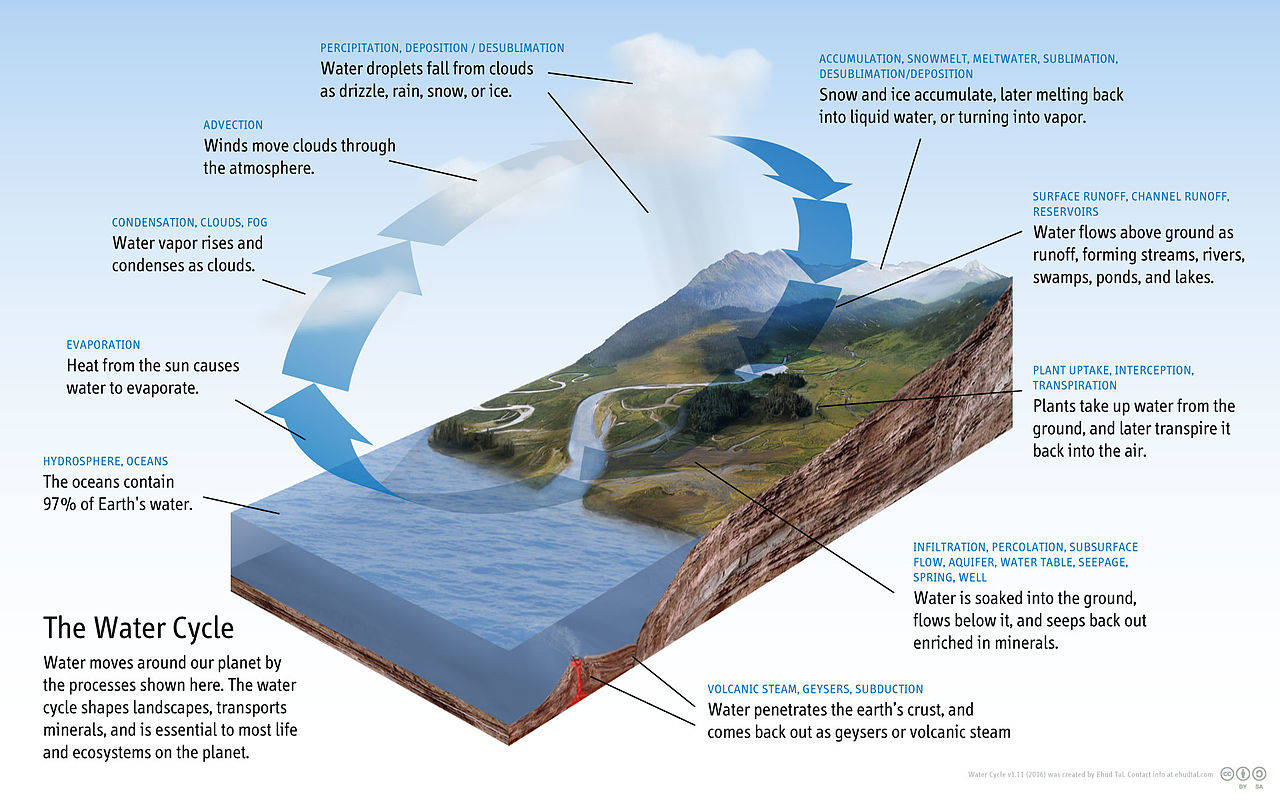
EMBODIED Functionality: The Oxygen & Carbon Dioxide Cycle
On earth, the breathing processes of human and animal life are balanced by the activities of plant life. Humans breath in oxygen and exhale carbon dioxide as a waste material. With plants it is the other way around, with them using carbon dioxide as a raw material along with sunshine to produce carbohydrates and oxygen, which humans and land animals need to survive. This virtuous cycle thus repeats to the benefit of both - humans and animals and plant life. What mechanism does the oxygen-carbon cycle use as a means of exchange, as this process does not proceed due to phase transitions? Carbon dioxide and oxygen are completely different substances and phase transitions are not possible between two different substances. That would amount to the discredited practice of alchemy; as previously outlined. So how does the oxygen-carbon cycle work? It uses the component structures in human and animal life (lungs and the respiratory system), and photosynthesis in plants to convert the raw materials into the desired products. This type of functionality we will call embodied functionality, as it uses different structural components of a unified system, to produce the defined aim. Did you catch the distinction between phase-functionality and embodied-functionality? Phase functionality uses DIFFERENT PHASES (or systems) of the same entity to produce its outcomes; embodied functionality, uses DIFFERENT STRUCTURAL PARTS (or systems) of the same entity to accomplish its outcomes!
This definition is critical to grasp thoroughly, so let's look at some more examples in order to understand it more fully. For instance, are super-organisms like ant colonies phase functional or embodied functional? The answer is they are embodied functional because DIFFERENT entities - or types of ants (i.e. queen or worker ants) - within the same ant colony, are responsible for accomplishing different tasks in order for the colony to function. How about the weather? The weather is also embodied functional as it uses different components (clouds, winds, geography, the sun etc.) of a unified system to produce the different climates and weather conditions we see on earth. Notice that for something to display embodied functionality doesn't mean the different components are in physical contact with each other, just that they work together in a coordinated way to accomplish a set effect. Similarly phase transitions are not limited to the four states of physical matter: solid; liquid; gas; and plasma - as one of our following examples will demonstrate. Let's now look at digestion, is it phase functional or embodied functional? Once again, digestion uses embodied functionality. Digestion has two major processes: mechanical (chewing to break the food down) and; chemical - where enzymes break the food down further, into the chemical form that our bodies can use for energy. However, while digestion is embodied functional, ingestion, taking food in, is phase functional. With ingestion, when we eat a meal, it produces one effect in our mouths (taste) and a completely different effect once it enters our blood stream - sustenance, while always being the same entity, just in different forms or phases (solids, and later broken down first mechanically, and later chemically into liquids etc.). This is why when someone is incapacitated in a hospital, they can be fed their essential vitamins intravenously, just by changing the phase or form of the food from solid to liquid.
Summary
In closing, we summarize the topic of functions by restating that a function is the invisible connection when a variation in one thing causes a variation in another. Also, this connection must have definite values at all instants while the function is operational, to be a valid function. Lastly, we can distinguish between phase functions and embodied functions through the easy to remember methodology of: is it the same thing in different phases, that produces the effect; or is different things of a bigger system acting together, that produces the effect? That is, is the function the result of different components of a larger unified entity producing different results (embodied-functionality), or is the function the product of different phases of THE SAME ENTITY, or element, producing the effects? Once we know that answer, we will know whether the function is phase functional or embodied functional.