
The Great Game Changers of the 20th Century
Henrietta Swan Leavitt
Starting in 1903 Henrietta Leavitt (4 July 1868 - 12 December 1921) worked full time at the Harvard College Observatory as a 'computer'. Computer was a term applied to the women who worked to catalogue stars as captured on photographic plates by the male astronomers at the Harvard observatory. No women were allowed to handle the telescopes as astronomers, so if a woman wanted to have a career in astronomy she had to try and work as a computer in one of the only institutions of the day that would even allow that. Conversely, the Harvard Observatory could not find any male astronomers who were willing to do the monotonous, repetitive and detailed work of cataloguing the stars, hence qualified women were hired to do the job. When she started Leavitt was not even paid for her efforts, but coming from a family with means she agreed to work without pay. Hired to classify and catalogue a known type of variable star called Cepheid variables, she busily scanned photographic plates looking for any evidence that in the thousands of images on the photographic plates there were any that met the criteria for cepheid variables. This laborious task included comparing the size of stars on different photographic plates of the same area of the sky taken at different times and looking out for any size differences in the images of stars. This she did diligently! By the end of her career, she had identified 2400 cepheid variables, doubling the number of then known cepheid variables!
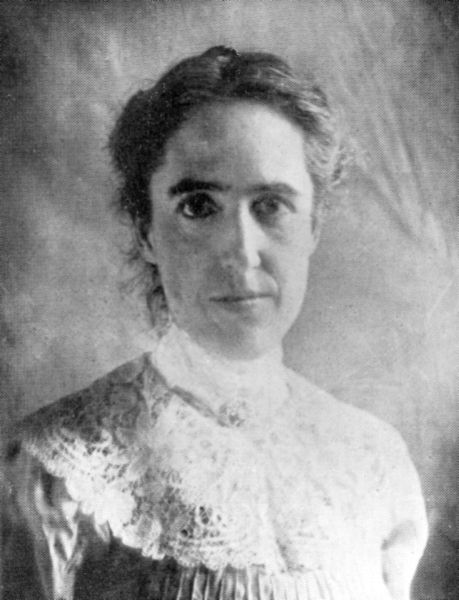
The history of scientific knowledge is that it has always been hard won. Progress, was not the product of relaxed forays to one or other mystery. Science is hard work, but more menacingly, it is executed by people difficult conditions. In a quick run through of the profiles we have already covered, we realize that the scientists involved had to overcome many obstacles, from health, to lack of financial resources, to lack ot the necessary to properly immerse oneself in the problem solving nature of deep thought, to lack of interest from the establishment once progress had been made and published, or even worse, outright persecution and sentences of imprisonment or death for publishing thoughts that were deemed to contrary to some or other authority: most often the Catholic Church. In the case of Henrietta Swan Leavitt, the difficulty, lay in the limited roles women were given within the scientific community, no matter how brilliant they were. As with Emilie du Chatelet, so many years prior to her, Swan Leavitt, had to be persistent, in order to persevere, and leave her mark. And leave a mark she did. Persistence pays.
Cepheid variables are called cepheid's because the first type of such stars that was quantitatively classified is called Delta Cephei. Delta Cephei was known to be a variable star, but by how much and how long it took had not been yet discovered. It was through the efforts of an amateur astronomer named John Goodricke (17 September 1764 - 20 April 1786) who having been invited by a friend who owned a telescope to come observe Delta Cephei, carefully noted its fluctuations and determined that it had a precise regular period (the amount of time it takes to cycle from peak size, then shrink and return to peak size) of 5 days and 8 hours. He had previously discovered that the brightness of a star named Algo varied. Being aware of such a class of stars he regularly spent long hours as an amateur astronomer observing the night sky. He achieved acclaim within the scientific community for his accomplishments, earning the Royal Society's Copley Medal for 1783. The category of stars he discovered are called regular short period variable stars. Two of the most notable sub-categories of such stars are cepheid variables, which have periods in the range of one to 50 days (meaning they repeat their cycle of shrink grow shrink every 1 to 50 days) and RR Lyrae variables, which have much shorter periods of between 1 to 24 hours. As with cepheid variable, RR Lyrae variables are so named after the first star RR Lyrae, which was calculated to have this particular range of variable luminosity. Variable stars have stable cores, it is their atmospheres that oscillate (grow and shrink in size) with a regular period (within a set amount of time from peak to peak). Born deaf and mute, Goodricke overcame those challenges and achieved much in his short life. Unfortunately, he died of pneumonia - a hazard from his long hours spent outdoors at night - at just 21 years of age! A worthy and acute amateur astronomer with a promising future in astronomy.
Leavitt carried on from where Goodricke had prematurely left off. Like him, she had a keen eye for observation and pattern. Nine years after she had started working at the Harvard Observatory continuously (she had worked there briefly before going on a tour of Europe), she struck gold. All the cepheid variables she was discovering and cataloguing were in the same relatively small area of the night sky in the Small Magellanic Cloud. The difficulty with knowing accurately the location of stars in the heavens is you cannot measure their distance directly, as one would with a measuring tape and without that there are too many variables to narrow down the measurement with any level of certainty. For instance, when looking at an average dim star in the sky, one wouldn't know if it was dim because it was far away or if it was dim due to low intrinsic luminosity. However, Leavitt studying stars that were all in the same small area, concluded that they were all the same distance from the earth. One variable down. Next she carefully noted that their periods, luminosity and size were all directly related!. This meant the larger a star was the longer its period would be, and the higher its intrinsic luminosity. So exacting was this relationship that she was able to work out the precise relationship and formulate a law - Leavitt's law! With this constant factor at her disposable, Leavitt could look at a variable star and as soon as she knew its size, she would immediately know its intrinsic brightness. The last piece of the puzzle was what Newton had discovered and described centuries earlier, that light like gravity follows an inverse square law. That is, light gets weaker at a rate of the square of the distance between the radiating object and the observer. For the first time astronomers could measure the distance to the cepheid variables in the Small Megallenic Cloud, and the distance is the key to unlocking the floodgates of other information about a star. That together with spectroscopy enabled astronomers to discover the
For example, if a particular star's period is five days, it means it takes five days to complete its cycle. In other words, it will be the same size every five days. In Illustration 8A below, the cepheid variables, are the yellow stars that keep varying in size.
EXPLANATORY NOTE:
Swan Leavitt added much to our knowledge of the universe. Her efforts and diligence added a further rung to the cosmic ladder. No longer were we constrained to the limitations of parallax for calculating cosmic distances. Suddenly we could further, and with more precision than ever before.
Walter Baade
In 1944, 36 years after Leavitt's discovery of cepheid variables came another shock: there were two kinds of cepheid variables, and that knowledge again shape mankind's ideas of the universe. In 1929, Hubble had published the results of his astronomical studies and the with them, an estimate as to the size of the universe, based on the astronomical distances established through cepheid variables. Wilhelm Heinrich Walter Baade (March 24 1893 - June 25 1960), known as Walter Baade, added his contribution to the scientific knowledge of the time and upended Hubble's view, in the process. He got this opportunity, through the extraordinary circumstances provided by the second world war. The Mount Wilson Observatory was a hive of activity in the first half of the twentieth century, and Baad worked there from 1931 to 1958. During WWII, there were worldwide blackout conditions, and Baade took full advantage - just as Eddington had in 1918 - to study the stars under reduced light pollution. This allowed for the perfect conditions for Baade to resolve the stars in the Andromeda Galaxy and realize that they formed two population types! He named the populations Population I and Population II. To his credit, his paper acknowledged that the idea of more than one population type had originated with someone else:
The two types of stellar populations had been recognized among the stars of our own galaxy by Oort as early as 1926" Walter Baade - Stellar Population Article in Wikipedia
This data, in turn, led to Baade's discovery that there were two types of cepheid variables. Baade's two new population types corresponded with Type I Cepheids and Type II Cepheids. The important difference between the two types is that population II variable stars pulsate differently but more importantly, they are found at different galactic scales. They are found in the center of galaxies; in globular clusters; It was that discovery which shook up humanity's worldview. The difference between the two types of Cepheids, was that Population I stars are brighter and are thus more useful in established extreme distances. The fact that there were now two types meant there was an additional rung in the cosmic distance ladder. It was this refinement to calculations that enabled Baade to come up with a new estimate for the size of the universe! Hubble's estimates had treated all cepheid variables as being of the same type. This led to major inaccuracies in the final measurement values. Baade's results, which he presented to the International Astronomical Union in Rome, in 1952 were double, the size of Hubble's universe! Everyone was blown away. Within a very few years, the universe had gone from being just the Milky Way to having many galaxies, and an unimaginable size, to being of a scope that's truly incomprehensible to humans - as that new size was itself doubled!
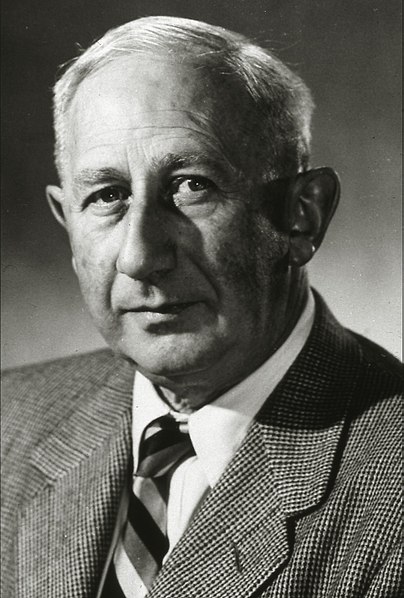
Like a detective working a cold case, Baade had to use clues from ancient structures to formulate a theory of the universe in his mind. Sometimes, what's needed is not just new evidence, but a proper understanding of the "old" evidence. This was the case with Walter Baade. More impressive still was the recalculations he performed, once he realized that new fundamental assumptions need mental frameworks. By not prejudging where the evidence would lead humankind, Baade was able to expand his mind to grasp new possibilities. This simple achievement allowed his contemporaries to expand their horizons by realizing that the universe was at least twice the size it was previously thought to be.
EXPLANATORY NOTE
Here, I have shown Baade's cepheid variables, in blue. I have marked off the area that was the previous limit of mankind, in red. You will notice that Swan Leavitt's contribution is in yellow and falls inside the red boundary. In this way, the scientific body of knowledge kept growing - to humanity's benefit. Mankind, then realized that it was useless to bound the universe arbitrarily, in the absence of any evidence for such claims. Hence, Celestial Spheres were no longer part of the model. In the illustration above, both types of cepheid variables are peppered in among a sea of innumerable stars! The red boundary is not literal. It only indicates the previous farthest points of the universe, we could accurately estimate distances for. Next another jump in know-how.
Annie Jump Cannon
As astronomy continued to mature as a science it became increasingly more urgent to formulate a more coherent classification system for the different types of stars. At around the beginning of the 1900's, a nearly deaf scientist, a spectroscopist with a well honed aptitude for the logical ordering of things tackled the problem with the vigour and rigour that only she could bring to the task. With improved instruments now available to astronomers, not only were new stars being added regularly to the database of known heavenly objects, but also new types of stars were being regularly discovered. Discord between Antonia Maury and Williamina Fleming, who was overseer for the project on, arose with the former favouring a highly complex classification systems and Fleming preferring a much simpler scheme. Cannon proposed a system that made the best of both approaches. Annie Jump Cannon (11 December 1863 - 13 April 1941) realized that stars could be more accurately classified by using the full range of absorption lines in their spectra. Previously, they had been classified using only one variable, the strength of their hydrogen lines. Of course, stars are composed of more than just one element, and Cannon, understanding the higher cataloguing power of using a more comprehensive identification system overhauled the previous star naming and classification system. Her new system was vastly more accurate than the old one, in the same way as having a full set of fingerprints for a suspect is more valuable than having a partial imprint of only the left thumb! Her naming convention kept some of the entrenched older conventions (which are bases on letter) but re-ordered them more intelligently. It classifies star strength with letters O, B, A, F, G, K, and M. Each letter, in turn has ten subcategories of classification according to temperature, so that an O0 star would be the hottest and a M9 the coolest. Our home star, the sun is a G2 star, with a surface temperature of 5500 degrees celsius. Cannon published her findings in 1901.
Jump Cannon loved astronomy, and it was her single-minded focus throughout her life. Her career in astronomy was long and fruitful. Having retired after 40 years, she still went to work, and only stopped when she suffered a sudden short month long illness. At the beginning of her career she was accused of not following the course that many obviously wish she had: that of becoming a housewife and raising children. But Jump Cannon was raised well and knew that her life should be a reflection of her free will, as was God's gift to her. She had been encouraged to pursue her passion for astronomy by her mother who was also the person who introduced her to astronomy. For reasons that are not detailed in her Wikipedia profile, she never did decide to get married, or have children. Instead, she devoted her time to mastering the profession she had chosen and as was her wish, she mastered it! She was a pioneer who left a worthy legacy.
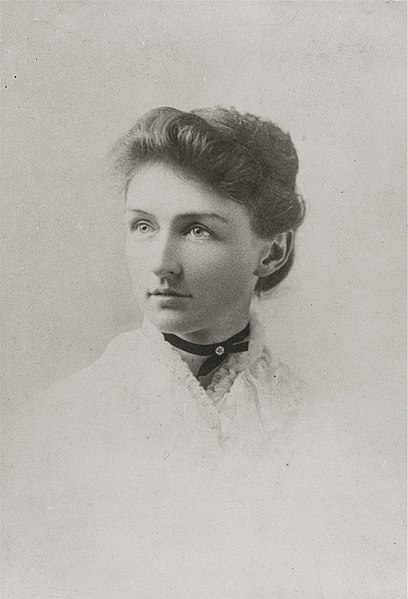
Having been hired in 1896, Cannon worked both tirelessly and meticulously - a rare combination! She classified over 350 000 stars in her lifetime, more than anyone else! Astronomy was not just her profession, but her great joy. This can be seen by the fact that she was always improving in her abilities and she would acquire other skills that would help her in her astronomical endeavours, such as learning and honing her photographic skills. Wikipedia tracks the dramatic rise of her cataloguing skills with the following statement:
When she first started cataloging the stars, she was able to classify 1,000 stars in three years, but by 1913, she was able to work on 200 stars an hour. Cannon could classify three stars a minute just by looking at their spectral patterns and, if using a magnifying glass, could classify stars down to the ninth magnitude, around 16 times fainter than the human eye can see. Her work was also highly accurate." Wikipedia
The Harvard Computers, the group of women, who were hired to finish compiling the Henry Draper Catalogue - a project that aimed to map every star in the sky, were working under the guise of Edward C. Pickering. He later said of Cannon: "Miss Cannon is the only person in the world - man or woman - who can do this work so quickly." The computers, who included my personal favourite Henrietta Swan Leavitt, worked six days a week, seven hours a day. To put her expertise and achievements in perspective: that means in as little as 17 years, she had mastered her chosen profession to the extent that she completed in one work day what used to take her a year when she first began!
Honours
Annie Jump Cannon, enjoyed much acclaim in her 77 years of life. Among them are been named as one of the "greatest living American women" by the League of Women Voters in 1929, and having the lunar crater Cannon and the astroid 11120 Cannonia named after her.
Meghnad Saha
But stars are just the sum of their parts and the most basic complete structure is the atom. Meghnad Saha (6 October 1893 - 16 February 1956) showed that even the basic level of atomic structure, matter emits different colours of light for different frequencies of light. So we now understood that atoms can give of light at different temperatures. By understanding how stars worked at their most basic level, astronomers could now use stellar classification, the classification of stars based on their spectral lines and match them to their temperatures! This technique, uses a prism to split the light coming from stars into its constituent colours. This continuous rainbow of colours produced by the surface of the emitting star - its photosphere, has a further layer of spectral lines on top of it that is produced by the photosphere of that specific star. The width of these absorption spectral lines is a measurement of the abundance of that particular element in the star's makeup. Another piece of the puzzle was solved. Before this development it was impossible for astrophysicists to determine the temperature of far away objects. Saha, died relatively young of a heart attach, but he achieved much in his short life and made a key contribution to the advancement of astronomy and mankind's understanding of the universe.
Cecelia Payne-Gaposchkin
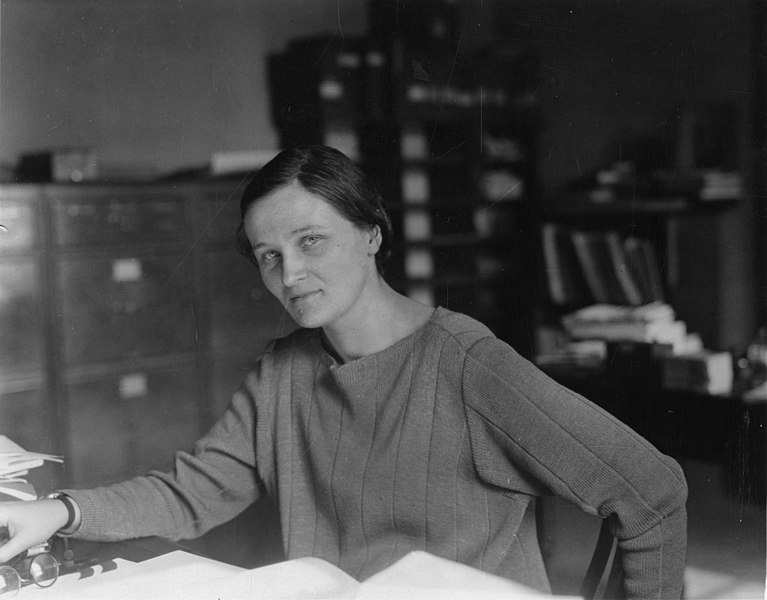
The next development was a more groundbreaking. Cecelia Payne-Gaposchkin (10 May 1900 - 7 December 1979), is - bar none - one of the most brilliant astronomers and astrophysicists to have ever lived! She seamlessly melded the insights from Jump Cannon, Max Planck and Meghnad Saha into a unified whole that destroyed all preconceptions of the composition of the universe and simultaneously ushered in the current era of cosmology. Born in Buckinghamshire, England, at 18 she was a student at St Paul's Girls' School. She had a music teacher, Gustav Holst, who encouraged her to pursue music. Her father was a musician and perhaps, he spotted in her some affinity for, or aptitude towards that discipline. However, bold and open-minded, she chose instead to follow her own path and pursue science as her career. A year later, she knew exactly what particular field in science she wanted to pursue. Having attended a lecture by Arthur Eddington (of Einstein fame), she was convinced, she wanted to be an astronomer. The lecture was a deep dive into Eddington's expedition to Principe to confirm Einstein's theory of special relativity. It had an immediate and profound on Payne-Gaposchkin. In her own words taken from her Wikipedia profile, she says:
The result was a complete transformation of my world picture. [...] My world had been so shaken that I experienced something very like a nervous breakdown." Cecelia Payne-Gaposchkin
In her 1925 doctoral thesis she put forth the startling conclusion that the stars did not have the composition of planets. The conventional wisdom in her time was that all stars were made of from range of the roughly 100 elements found on the periodic table. The theory was not completely without substance as the atmospheres of stars do have many of such elements. However, through their immense size the body of stars is much more massive than their atmospheres, and scientists were coming to their conclusions based on the measurements of the atmospheres. Payne-Gaposchkin, through the exercise of the most impeccable scientific instincts arrived at a conclusion that was so unconventional that when she proposed it, one of the professors at Harvard, Otto Struve, commented that it was: "The most brilliant PhD thesis ever written in astronomy!" At the center of the disagreement was a stubborn paradox, which no cosmologist had succeeded in cracking. There are more than a million ways to to combine 100 elements, yet when scientists used spectroscopy to look at the elements of that composed the stars they continuously got results that showed 7 types of spectra. How could that be? How could an entity made up of 100 substance vary so little in its chemical makeup?
It was a problem singularly suited to the uncompromising genius of one Cecelia Payne-Gaposchkin. Payne-Gaposchkin was aware of that Annie Jump Cannon had classified stars according to the strength of many different elements, yet in the classification that fact was only a contributing factor and not a deciding one. In Cannon's cataloguing system the final classification of each star was according to its temperature and not what it was made of. That makes sense, after all it was a catalogue of stars - essentially a catalogue of nuclear furnaces. It made sense to list them according to the intensity of the heat, in much the same way we classify light bulbs according to wattage. Another factor to consider was that Max Planck in one his contributions to physics had of explained how different stars emit different colours of light based on their temperatures. Lastly, a final piece of the puzzle was from the work of Meghnad Saha, who resolved the problem of how temperature is the key to understanding how the same atom can give off different colours of light, through the process of ionization under extreme temperatures.
That was the canvass and it would take the application of all of Payne-Gaposchkin's mental prowess to fill it with the broad strokes of undeniable logic. She noticed that all three theories had at the center the key element of temperature. What's more, it seemed that temperature played such a key role that it, and not the chemical composition of stars determined the colour a star gave off. Could it be, that it was the temperature of and not the substances in stars that was responsible for the seven variations of spectra? The search would require Payne-Gaposchkin to look at the different heat signatures of many different elements to see which fit the data. Before Jump Cannon's pioneering work, stars had been classified by the strength of only one substance Hydrogen and that's where Payne-Gaposchkin started. To her great relief, Hydrogen (the first element in the periodic table) and its ionized states fit perfectly into the seven spectral results that had cosmologists confused - but it was not the only substance. To account for the missing absorption lines, she next tried helium (the second element in the periodic table) and finally the results could be fully accounted for. The rarefied (less dense) atmospheres of stars where different - both in elemental composition and operational dynamics - from the highly compacted inner cores. In these inner cores the extremely high temperatures caused ionization of the same two elements. It was these ions that spanned to seven spectral signatures. Her next step was to calculate the relative abundance of these elements to get the full picture of the makeup of stars. In doing so she discovered that hydrogen was one million times more abundant in stars than other chemicals. Experimentation... A radical departure from convention that was backed by hard evidence. What could go wrong? As is always the case with paradigm-shifting truths, her theory faced stiff opposition from people who, wanting to maintain the status quo, argued that there was no substantial differences between the stars and the earth. The common strand we must not fail to notice in such opposition is that it is always accompanied by impassioned arguments devoid of substance. The people who take the opposing view are always vehement in their beliefs, but without any evidence.
Payne-Gaposchkin was devoted to research. She is quoted as saying: "The reward of the young scientist is the emotional thrill of being the first person in the history of the world to see something or understand something. Nothing can compare with that experience...." Galileo expressed similar ecstasy at the thought of being the first to discover the hitherto unseen wonders of the heavens three centuries earlier, "It was granted to me alone to discover all the new phenomena in the sky and nothing to anybody else. This is the truth which neither envy nor malice can suppress." Prepared to sacrifice to achieve her aims, Payne-Gaposchkin emigrated from England to America to pursue astronomy. Her initiative paid off as she would find a life-long home at Harvard university.
Additional Challenges
The spirit of the times meant that although she completed her degree, she was not awarded one as Cambridge University would not grant women degrees until 1948! Of course, she knew that before she embarked on her studies. We thank those like Cecelia Payne-Gaposchkin, who dare to walk the road less traveled. Where would astronomy and astrophysics be without her groundbreaking pioneering work? Facing the stark reality that she would not be able to pursue her passion for astronomy in England, she boldly opted to emigrate to the United States, where opportunities although few, were more plentiful than what England could offer. Again the institution that came to a brilliant women's rescue was the Harvard College Observatory, where Annie Jump Cannon and Henrietta Leavitt had both earlier made hugely significant discoveries. She emigrated in 1923 after meeting Harlow Shapley, the Director of the institute. A new program to encourage women to study astronomy had just been approved. Payne-Gaposchkin was the second student to be granted the fellowship!
Imagine, it was only two years later, at the age of 25 that she would publish her groundbreaking work. Her thesis, Stellar Atmospheres; A Contribution to the Observational Study of High Temperature in the Reversing Layers of Stars earned her a PhD from the Radcliffe College of Harvard University, the first person to do so. (The Radcliffe College was the sister institution to the all male Harvard College.) Upon submitting her paper for review Professor Henry Norris Russell, urged her to recant her findings that the stars were mostly made from hydrogen unlike planets as it directly opposed the view commonly held by all other scientists. Her amazing conclusion came from painstaking analysis and the most scalpel sharp of reasoning abilities. I quote from Wikipedia:
Payne was able to accurately relate the spectral classes of stars to their actual temperatures by applying the ionization theory developed by Indian physicist Meghnad Saha. She showed that the great variation in stellar absorption lines was due to differing amounts of ionization at different temperatures, not to different amounts of elements. She found that silicon, carbon, and other common metals seen in the Sun's spectrum were present in about the same relative amounts as on Earth, in agreement with the accepted belief of the time, which held that the stars had approximately the same elemental composition as the Earth. However, she found that helium and particularly hydrogen were vastly more abundant (for hydrogen, by a factor of about one million). Her thesis concluded that hydrogen was the overwhelming constituent of stars, making it the most abundant element in the Universe." Wikipedia
In short, due to the activity inside the sun, many of its atoms are in their ionized form, meaning having either a negative of positive charge depending on whether they've lost or gained an electron. This dynamic is heavily dependant on the amount of energy an atom is absorbing or emitting. Each of these energies can be expressed as a particular colour, frequency or temperature with all three expressions being equal and interchangeable in communication. Payne-Gaposchkin applying Saha's ionization theory in this way allowed her to decode the secrets of the stars. The earth has many elements, stars have much much fewer! Her key insight was in understanding that: "the great variation in stellar absorption lines was due to differing amounts of ionization at different temperatures, not to different amounts of elements." This meant one element (say hydrogen) giving off light at many different temperatures (as would be the case in the sun), would produce spectral lines that could be interpreted as proving the existence of many different elements, whereas only one element was involved! In her detailed analysis, she discovered that hydrogen was much much more abundant than any other element, not only in the sun but in the universe! For instance, in our solar system, there are many more planets than there are stars (only one), and yet the material that makes up the sun is much more abundant because of the relative size of the sun compared with the planets. Nasa.gov says: "The sun is the largest object in our solar system, comprising 99.8% of the system's mass." 99.8 percent! So Payne-Gaposchkin found that hydrogen and helium were most abundant elements in the stars and hence the universe in that order. With hydrogen being more abundant by about one million times! This shattered all previous understanding of the makeup of the universe. However as we noted earlier, a professor tried to convince her to water down her findings. Only if she'd had Galileo as her mentor!
In the sciences, the authority of thousands of opinions is not worth as much as one tiny spark of reason in an individual man.Galileo Galilei
Science is not a team sport. It's a lonely struggle, often a life-long one to snatch some kernel of truth from the darkness of historical ignorance. As both Newton and Einstein attested to, each in their own unique way: they were not cleverer than other people, they were just more curious and stayed with problems far, far longer... until eventually the problem's resolution crystallized in their minds. True practitioners of the scientific method depend on a religious devotion to observation, rigorous experimentation, accuracy of empirical data, detailed analysis and bold theories to harmonize the empirical evidence with observations. These are the foundations of the scientific method as established and practiced by Johannes Kepler, Galileo Galilei and Sir Isaac Newton. They are irreducible and remain constant through every epoch in the history and future of mankind.
No great discovery has ever been made in the absence of any one of these five principles of science. Even in cases such as Kepler making use of meticulous data compiled by a predecessor, the component of data must be there. The same applies to any of the other four components. They, just like the paradigm shifting explanations that: the solar system is heliocentric; Venus has a full range of phases; Jupiter has its own satellites; understanding the makeup of stars and all other true advancements in the sciences are a scientific discovery, in themselves! Abandoning any one of them is exactly equivalent to, having come to believe that the earth is spherical and is the third planet in a heliocentric solar system, suddenly reverting back to an unshakeable belief that the earth is flat. Or that, while it may be spherical, it nonetheless is at rest in the center of our solar system. The scientific method, like mathematics itself, is not created, it is discovered! And having been discovered, abandoning any of its principles is a mark of regression so great, that none who fall into that trap, can ever be fully rehabilitated! False scientists rely on conventional wisdom, empty philosophies and the consensus of others to promote their vain theories. Their futile conjectures do not move scientific knowledge forward, rather they maintain the status quo, until eventually they are utterly disproved. And what do their proposers and adherents do then? They just create a slightly varied form of the very same theories and start the loop of illusion afresh. Meanwhile, Galileo rightly assesses the negative impact such haughty intellectuals have on those who have true scientific contributions to make.
And who can doubt that it will lead to the worst disorders when minds created free by God are compelled to submit slavishly to an outside will? When we are told to deny our senses and subject them to the whim of others? When people devoid of whatsoever competence are made judges over experts and are granted authority to treat them as they please? These are the novelties which are apt to bring about the ruin of commonwealths and the subversion of the state."
And more to the point...
In the long run my observations have convinced me that some men, reasoning preposterously, first establish some conclusion in their minds which, either because of its being their own or because of their having received it from some person who has their entire confidence, impresses them so deeply that one finds it impossible ever to get it out of their heads."
The go to tactic through which those so affected try and halt the inexorable forward march of true science is:
By denying scientific principles, one may maintain any paradox.Galileo Galilei
When the torrent of evidence is harmonized with the veracity of observational data through a piercing air tight theory, they opt for the option of last resort. As another once put it, the emptiest drums, make the loudest noise. Galileo applied the thought specifically to the sciences:
If experiments are performed thousands of times at all seasons and in every place without once producing the effects mentioned by your philosophers, poets, and historians, this will mean nothing and we must believe their words rather than our own eyes?" Galileo Galilei
Unfortunately, Cecelia Payne-Gaposchkin did not have the supporting strength of a luminary like Galileo in her corner, and like a wilted flower starved of moisture and devoid of roots, she collapsed in the darkness and gave into outside pressure! In this way her example proves to a warning and not one to be copied. More than a decade earlier, Professor Russell had written a favourable critique of American physicist Henry Rowland's wholly incorrect understanding of the composition of stars stating in a 1914 article:
The agreement of the solar and terrestrial lists is such as to confirm very strongly Rowland’s opinion that, if the Earth’s crust should be raised to the temperature of the Sun’s atmosphere, it would give a very similar absorption spectrum. The spectra of the Sun and other stars were similar, so it appeared that the relative abundance of elements in the universe was like that in Earth’s crust." Prof. Henry Norris Russell
This, on the face, ludicrous assessment wasn't worth the paper it was written on! Had anyone carried out such an experiment: raising the earth's crust to the temperature of the sun's atmosphere? Of course not. Before Payne-Gaposchkin, they didn't even have the methodology to know what that the temperature of the sun's atmosphere was! The "agreement of the solar and terrestrial lists" is with reference to the metallicity of the sun's atmosphere. It is the fact that silicon, carbon and some other metals common to earth appear in about the same relative amounts on earth as in the sun's atmosphere. This fact though did not factor in that the sun's atmosphere could be made of totally different material to its atmosphere. Or even that if it was composed of the same materials, they could be in vastly different concentrations. Science does not have a scale, such as rigorous and lazy. There is only false science (non-science), and true science. Professor Russell's hero worship (for whatever reason, certainly not intellectual prowess - that much is obvious) of Henry Rowland, completely misled him. As the Christ says: "How can you believe, when you are accepting flory from one another and you are not seeking the glory that is from the only God?" (Joh 5:44)
Payne-Gaposchkin went on to receive some notable acclaim, but there were also terrible lasting consequences. People who pander to others are often hiding tremendous weaknesses. Professor Russell, later independently verified Payne-Gaposchkin's much earlier results, only briefly mentioning her contribution. I'll quote Wikipedia:
A few years later, astronomer Otto Struve described her work as "the most brilliant PhD thesis ever written in astronomy". Russell also realized she was correct when he derived the same results by different means. In 1929, he published his findings in a paper that briefly acknowledged Payne's earlier work and discovery, including the mention that "[t]he most important previous determination of the abundance of the elements by astrophysical means is that by Miss Payne [...]"; nevertheless, he is often credited for the conclusions she reachedCecilia Payne-Gaposchkin - Wikipedia
The terrible consequences have nothing to do with how Professor Russell treated her. It's how she treated herself that's revolting. Otto Struve was quite correct. His statement on the quality of her dissertation cannot be argued with. Her work was so complete, so compelling, its pleasurable just to meditate on it. The pure skill and ingenuity it took for 25 year old Cecelia Payne-Gaposchkin to arrive at her most startling conclusion is stupendous! That's how others felt about it, then and now. On the other hand, she, having accepted Prof. Russell's assessment as truth described it as: "spurious!" For the eight year olds, I don't want to define the word for you. Take the time to look it up.
That's the horror of not standing up for what you know is right! That's how the: "ruin of commonwealths and the subversion of the state," as Galileo put it - starts! It starts when individuals give in to outside pressure and trade the truth for lies and lies for the truth. (Isa 5:20)
Honours
Among a litany of honours and awards, some of the most notable are: She was the first recipient of the Annie J. Cannon Award in Astronomy in 1934; The American Physical Society's Doctoral Dissertation Award in Astrophysics was renamed the Cecilia Payne-Gaposchkin Doctoral Dissertation Award in Astrophysics (2018); Honorary Degrees from Rutgers University, Wilson College, Smith College, Western College, Colby College, and the Women's Medical College of Pennsylvania; Asteroid 2039 Payne-Gaposchkin named after her; The Payne-Gaposchkin Patera (volcano) on Venus is named after her; One of the ASAS-SN telescopes deployed in South Africa was named after her; and Institute of Physics Cecilia Payne-Gaposchkin Medal and Prize named in her honor in 2008 among many other honours